
Joint Wastewater Treatment Plant Bomlitz, Walsrode District, 230,000 PE
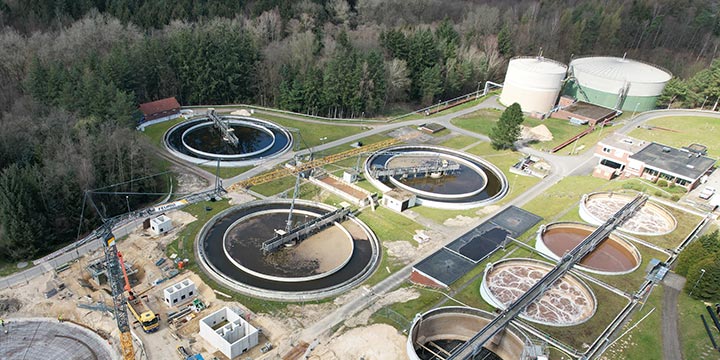
The Bomlitz wastewater treatment plant in the Walsrode district treats wastewater from the chemical park in Bomlitz and the surrounding communities. The plant's modernization addresses not only the need for structural renovations but also changes in load and hydraulic conditions. Due to the plant's age of approx. 55 years, it can´t hold on to the required standards, such as the DWA (German Association for Water, Wastewater and Waste) guideline A 131.
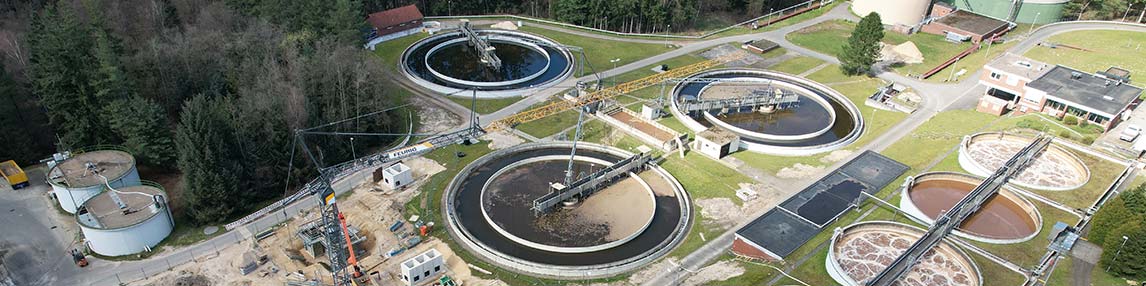
Therefore, in addition to structural upgrades, a process engineering adaptation of the plant is required, involving the construction of three new secondary clarifiers (approx. 39 m diameter) and the renovation and upgrading of the existing four aeration tanks.
Due to these complex conditions and a construction timeline of multi-years, the overall project is divided into four self-contained construction phases. Two of these phases have already been successfully completed, while the remaining phases are currently in the planning and implementation stages.
Therefore, in addition to structural upgrades, a process engineering adaptation of the plant is required, involving the construction of three new secondary clarifiers (approx. 39 m diameter) and the renovation and upgrading of the existing four aeration tanks.
Due to these complex conditions and a construction timeline of multi-years, the overall project is divided into four self-contained construction phases. Two of these phases have already been successfully completed, while the remaining phases are currently in the planning and implementation stages.
Wastewater Treatment Plant Lentföhrden, Design Capacity 5,500 PE
The Wastewater Association Südholstein operates the wastewater treatment plant in Lentföhrden, which underwent comprehensive modernization and expansion, due to its age of over 35 years. In addition to the plant's structural condition, the projected growth of the municipality of Lentföhrden within the Hamburg metropolitan area was a key criterion for the necessary upgrade. During the planning phase, the existing structures of the old plant were repurposed as future storage tanks, treated water reservoirs, and primary thickeners and were integrated into the overall concept to ensure cost-efficient implementation of the project.
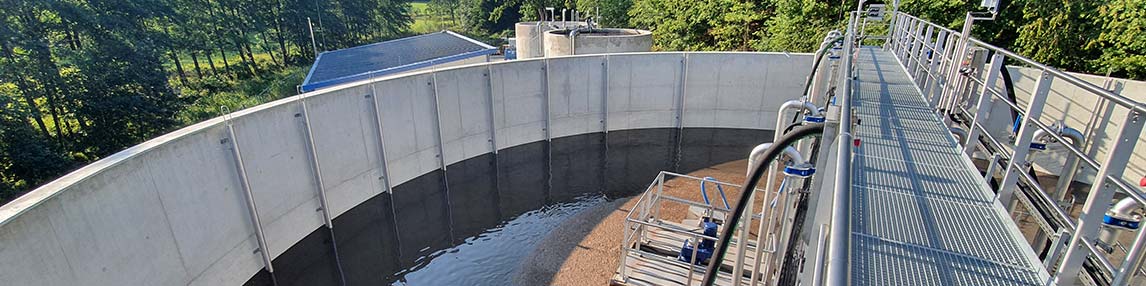
Analysis of the influent data revealed a significantly high nitrogen potential. Subsequently various processes were investigated during the preliminary planning phase, with the selective batch reactor (SBR) proving to be both economically and technically convincing. A mechanical sludge thickener, a process water treatment plant, and an operational and technical building were also constructed. Due to its location within a sensitive Natura 2000 protected area, the permitting process presented special requirements and was carried out in close and coordinated cooperation with the relevant authorities. The wastewater treatment plant must comply with the criteria of the EU Water Framework Directive.
Analysis of the influent data revealed a significantly high nitrogen potential. Subsequently various processes were investigated during the preliminary planning phase, with the selective batch reactor (SBR) proving to be both economically and technically convincing. A mechanical sludge thickener, a process water treatment plant, and an operational and technical building were also constructed. Due to its location within a sensitive Natura 2000 protected area, the permitting process presented special requirements and was carried out in close and coordinated cooperation with the relevant authorities. The wastewater treatment plant must comply with the criteria of the EU Water Framework Directive.
Wastewater Treatment Plant Mehrbachtal, 8,800 PE
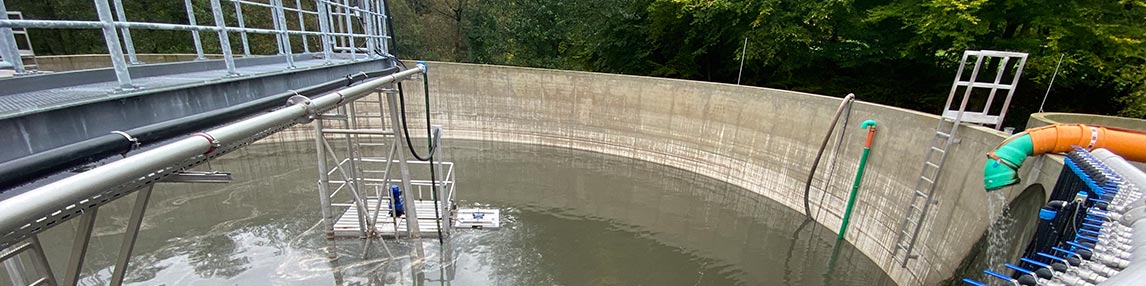
The Mehrbachtal wastewater treatment plant in Westerwald region underwent an overall upgrade and expansion because of decommissioning the neighboring Hasselbach plant and due to its exhausted capacity. The planning process took into account funding requirements and the specifications of the Water Framework Directive, in coordination with the SGD Nord (State Agency for Water Management, Northern Region). The project included two circular aeration basins operating under a retention system, a storage tank, and a two-story technical building constructed using a double-shell masonry design; some existing structures were repurposed. Additionally, the structural design for the reinforced concrete basins, constructed using waterproof concrete, and structural modifications to the existing structures were carried out. The work was completed in phases while the plant remained operational.

Wastewater Treatment Plant Wallmenroth-Betzdorf, 75,000 PE
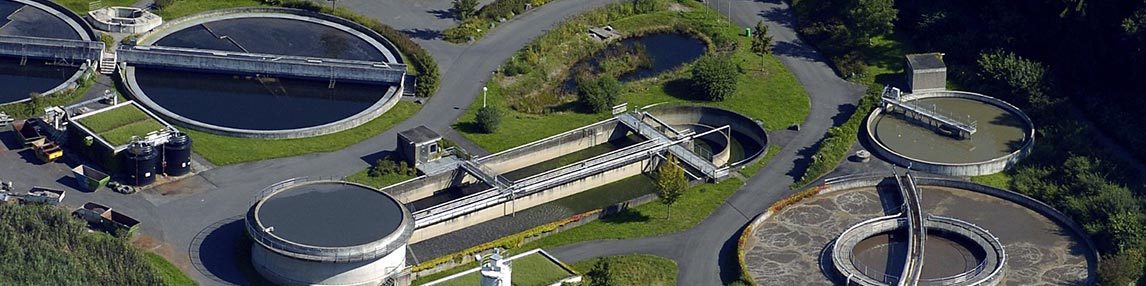
The Wallmenroth-Betzdorf wastewater treatment plant is operated by the Betzdorf-Kirchen Wastewater Association (AZV Betzdorf-Kirchen) and is located near the city of Siegen (population equivalent of 75,000). Due to increased demands, the plant underwent a comprehensive modernization while remaining operational. Parallel to the process upgrades, the concrete basins were structurally reinforced, allowing the new equipment to be installed in phases.
The activated sludge stage was upgrated with an energy-efficient aeration system, featuring pulse aeration and recirculation pumps, as well as a new compressor station with an expanded operating range to flexibly handle varying load conditions. The main low-voltage distribution board was also replaced and additions with automation and load management systems.
The mechanical sludge dewatering system (centrifuge) in a soundproof enclosure and a three-lane rake screen in a inlet area were also replaced. In addition, studies were carried out on gas storage and the optimized operation of the CHP plant in combination with a planned photovoltaic system (200 kWp).
The activated sludge stage was upgrated with an energy-efficient aeration system, featuring pulse aeration and recirculation pumps, as well as a new compressor station with an expanded operating range to flexibly handle varying load conditions. The main low-voltage distribution board was also replaced and additions with automation and load management systems.
The mechanical sludge dewatering system (centrifuge) in a soundproof enclosure and a three-lane rake screen in a inlet area were also replaced. In addition, studies were carried out on gas storage and the optimized operation of the CHP plant in combination with a planned photovoltaic system (200 kWp).
Wastewater Treatment Plant Flensburg(TBZ), Design Capacity Approx. 224,000 PE
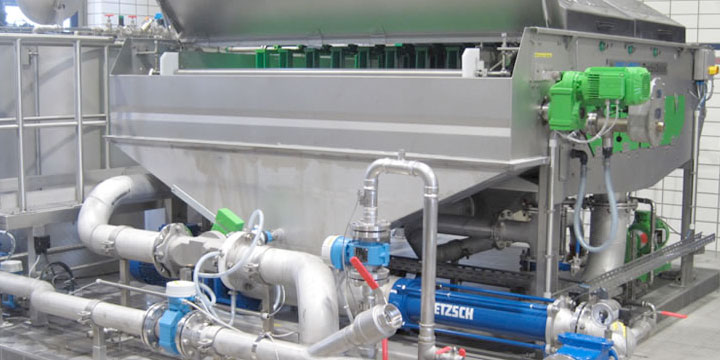
Optimization of high- and low-load biological treatment through the modernization of a recirculation pumping station: Pumping from basins 1A/2A into recirculation denitrification; no controllability, therefore no adaptation to variable influent conditions and process engineering deficiencies. Planned measure: Installation of dry-mounted, frequency-controlled pumps in the basement of the distribution structure NKB 4/5 including flow measurement (MID), along with the installation of a new pump control system, integration into the higher-level control system and process visualization. Extraction via a collection shaft (DN 800), return via pressure pipelines to the denitrification stage.

Wastewater Treatment Plant Bückeburg, 35,000 PE
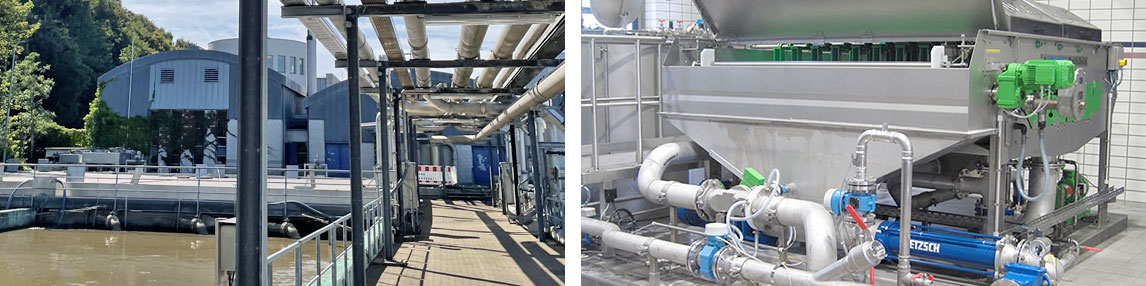
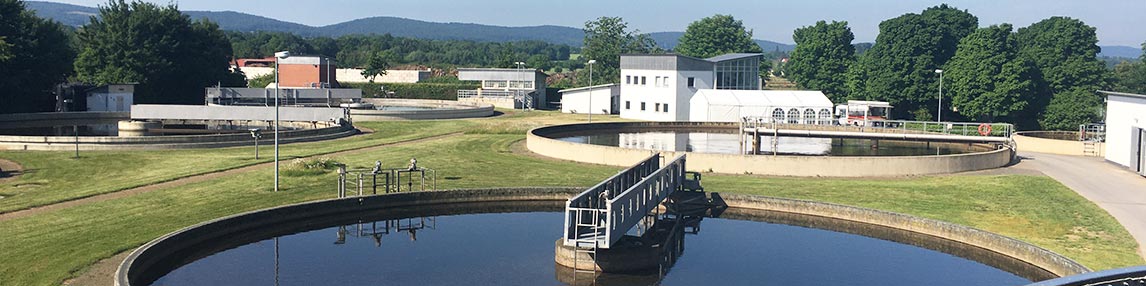
The wastewater treatment plant in Bückeburg underwent an entire modernization and conversion to anaerobic sludge stabilization as part of an economic analysis. This modernization was designed to efficiently manage the increasing sludge volume and sustainably reduce operating costs. The centerpiece of the project is the construction of a new digester with a 955 m³ digester, gas storage tank, and a machine house containing digester sludge pumps, gas processing equipment and a combined heat and power (CHP) unit. The plant generates its own electricity and utilizes the waste heat to heat the digester and the ancillary buildings.
The existing stormwater retention basin was functionally integrated as a primary settling tank and supplemented by a new intermediate pumping station for hydraulic connection. Existing buildings were strategically repurposed, conserving resources and increasing the overall plant efficiency. All construction and planning measures—including structural modifications and technical integration—were implemented while the plant remained operational. The project was funded by the German Federal Government and the N-Bank.
The existing stormwater retention basin was functionally integrated as a primary settling tank and supplemented by a new intermediate pumping station for hydraulic connection. Existing buildings were strategically repurposed, conserving resources and increasing the overall plant efficiency. All construction and planning measures—including structural modifications and technical integration—were implemented while the plant remained operational. The project was funded by the German Federal Government and the N-Bank.
Wastewater Treatment Plant Hemmoor – Refurbishment and Efficiency Improvement
Our company carried out a comprehensive modernization of the mechanical-biological wastewater treatment plant in the Cuxhaven district for AEH Hemmoor, operated by EWE-Wasser GmbH.
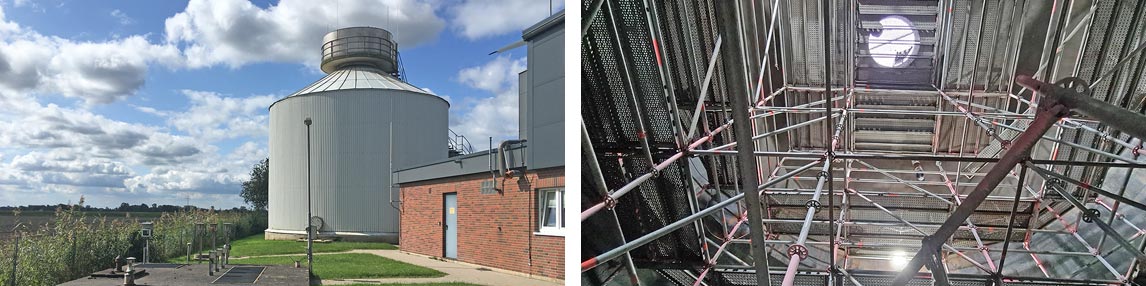
The focus was to optimize the digestion stage: structural refurbishment of the digester tower, installation of a central vertical agitator, replacement of the circulation pumps, and future utilization of the biogas via a combined heat and power (CHP) plant. To further increase efficiency, mechanical thickening of the excess sludge was also planned and implemented. The modernization of the boiler system for peak load heating was also part of the planning services.
Additional measures were implemented for the aeration tank, grit chamber, pumping stations and switchgear, resulting in energy-optimized and reliable overall operation of the wastewater treatment plant. Our planning services also included assistence with securing funding. The project was supported by N-Bank Niedersachsen under the Municipal Funding Guidelines.
The focus was to optimize the digestion stage: structural refurbishment of the digester tower, installation of a central vertical agitator, replacement of the circulation pumps, and future utilization of the biogas via a combined heat and power (CHP) plant. To further increase efficiency, mechanical thickening of the excess sludge was also planned and implemented. The modernization of the boiler system for peak load heating was also part of the planning services.
Additional measures were implemented for the aeration tank, grit chamber, pumping stations and switchgear, resulting in energy-optimized and reliable overall operation of the wastewater treatment plant. Our planning services also included assistence with securing funding. The project was supported by N-Bank Niedersachsen under the Municipal Funding Guidelines.
Wastewater Treatment Plant Handewitt – Expansion and Optimization
Our office was commissioned by the North Water Association to plan the expansion and optimization of the wastewater treatment plant in Handeewitt, including adjustments to the solar sludge drying system.
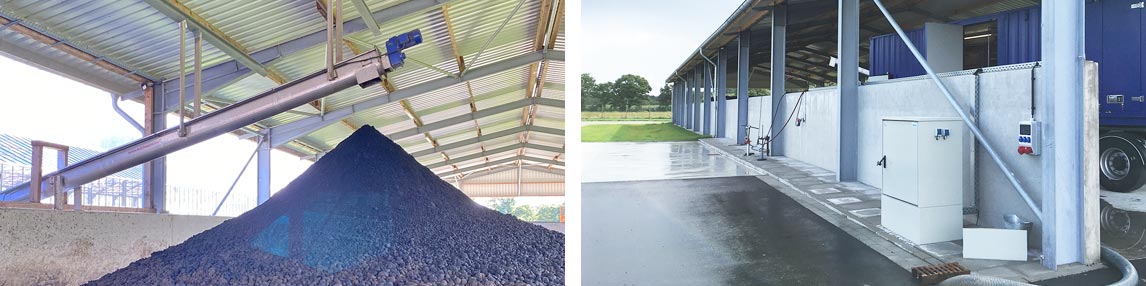
The core of the concept is the integration of a covered sludge storage hall, which buffers the sludge volume before it enters the solar dryer and ensures reliable year-round management. The dried sludge is then stored in a newly constructed granulate storage facility – economically and efficiently throughout the year.
Mechanical sludge dewatering is carried out using a flexible, mobile container solution, which will primarily be used in Handewitt in the future, but can also be used at other wastewater treatment plants within the association's service area if needed.
The core of the concept is the integration of a covered sludge storage hall, which buffers the sludge volume before it enters the solar dryer and ensures reliable year-round management. The dried sludge is then stored in a newly constructed granulate storage facility – economically and efficiently throughout the year.
Mechanical sludge dewatering is carried out using a flexible, mobile container solution, which will primarily be used in Handewitt in the future, but can also be used at other wastewater treatment plants within the association's service area if needed.
Wastewater Treatment Plant Scheeßel – Renewal of Mechanical Sludge Dewatering
Enwacon engineering was responsible for the planning and implementation of the complete renewal of the mechanical sludge dewatering system at wastewater treatment plant Scheeßel in the Rothenburg district. The goal was to sustainably reduce the high energy consumption as well as the maintenance and overhaul costs of the old system.
During the preliminary planning phase, various process technologies were tested in field trials before the decision was made to implement a modern centrifuge system (decanter). In addition to the dewatering unit, the thin sludge pumping station, the existing sludge storage tanks with turbid water discharge, agitators and a new polymer dosing station were also completely renewed.
Furthermore, the sludge discharge was relocated to a newly roofed sludge storage hall, significantly optimizing storage and handling. The switchgear for the sludge line was completely modernized and integrated into the existing process control system.
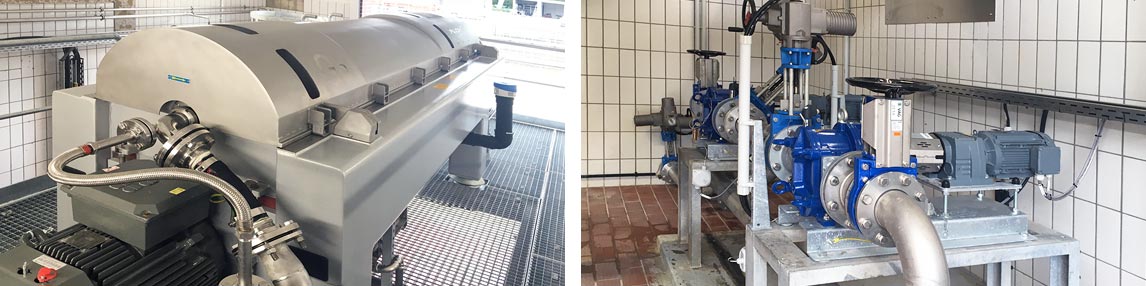
During the preliminary planning phase, various process technologies were tested in field trials before the decision was made to implement a modern centrifuge system (decanter). In addition to the dewatering unit, the thin sludge pumping station, the existing sludge storage tanks with turbid water discharge, agitators and a new polymer dosing station were also completely renewed.
Furthermore, the sludge discharge was relocated to a newly roofed sludge storage hall, significantly optimizing storage and handling. The switchgear for the sludge line was completely modernized and integrated into the existing process control system.

Expansion of the sewage gas utilization system at wastewater treatment plant in Marne
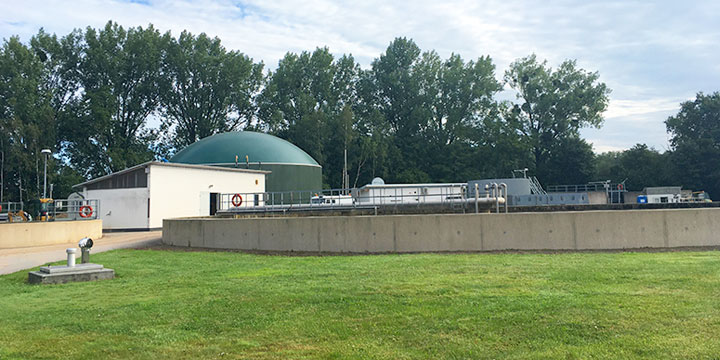
We were responsible for the planning and construction supervision of the expansion of the sewage gas utilization system and the heat supply at the Marne wastewater treatment plant for the Süderdithmarschen Water Association. As part of the project a new combined heat and power (CHP) plant (160 kW electrical / 170 kW thermal) was integrated into the existing system and the overall plant was upgraded to a thermal output of 550 kW. This modernization allows the produced sewage gas to be fully utilized for energy generation, eliminating the previously frequent need for flaring and providing energy efficiently through combined heat and power.
Digestate Utilization Concept – RWE Innogy Biogas Plant, Münsterland
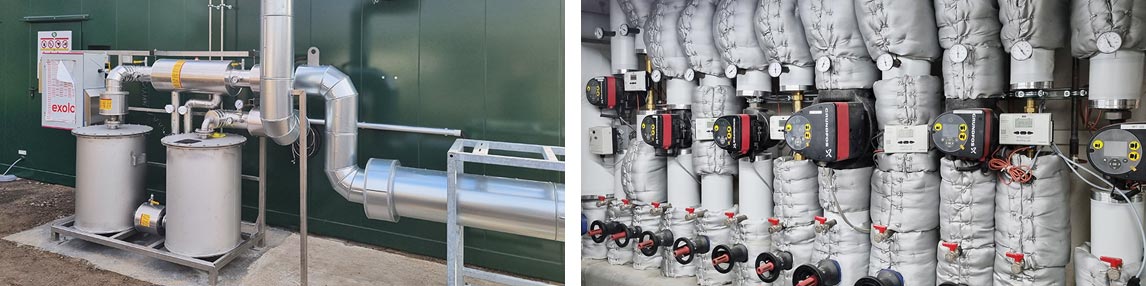
For RWE Innogy GmbH in Münsterland our office, in collaboration with the engineering company atd in Aachen, developed an enhanced digestate utilization concept for a modern biogas plant.
The goal was to optimize economic efficiency by an efficient processing and utilization of the digestate. Our services included a plausibility check and evaluation of functionality, calculation of material flows (input and output), nutrient balances and assessment of the individual process steps and the overall concept.
The work was rounded off with practical recommendations for implementation, ensuring the efficient and sustainable operation of the biogas plant. This project underscores our expertise in the planning of complex energy systems and sustainable resource utilization.

The goal was to optimize economic efficiency by an efficient processing and utilization of the digestate. Our services included a plausibility check and evaluation of functionality, calculation of material flows (input and output), nutrient balances and assessment of the individual process steps and the overall concept.
The work was rounded off with practical recommendations for implementation, ensuring the efficient and sustainable operation of the biogas plant. This project underscores our expertise in the planning of complex energy systems and sustainable resource utilization.
Biomass Treatment Plant, Anklam
For Suike Union in Anklam, our office handled the technical planning for the digestate treatment, including separation, wastewater treatment and gas and combined heat and power (CHP) plants, as well as the on-site construction management for a highly complex biomass processing plant for the energy utilization of sugar beet molasses from the bioethanol process.
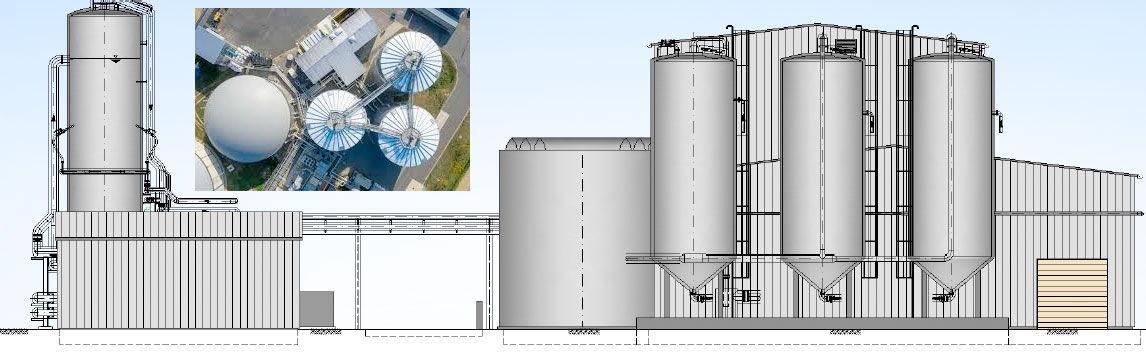
The plant comprises four fermentation tanks, a digestate storage facility, complete substrate preparation and conveying equipment and digestate dewatering technology. The system is complemented by state-of-the-art gas upgrading for the refinement of raw biogas into biomethane as a sustainable natural gas substitute – including all associated peripheral systems.
The engineering design was carried out in close collaboration with the engineering company Krieg and Fischer in Göttingen.
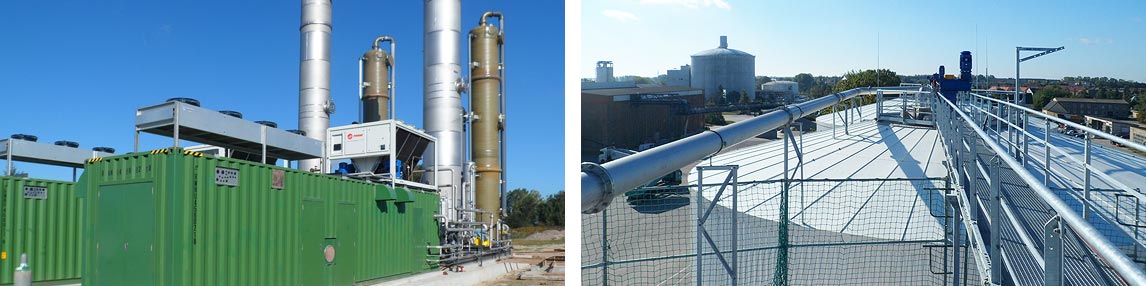
The plant comprises four fermentation tanks, a digestate storage facility, complete substrate preparation and conveying equipment and digestate dewatering technology. The system is complemented by state-of-the-art gas upgrading for the refinement of raw biogas into biomethane as a sustainable natural gas substitute – including all associated peripheral systems.
The engineering design was carried out in close collaboration with the engineering company Krieg and Fischer in Göttingen.

Kiel Trade Union House – Building Services Engineering
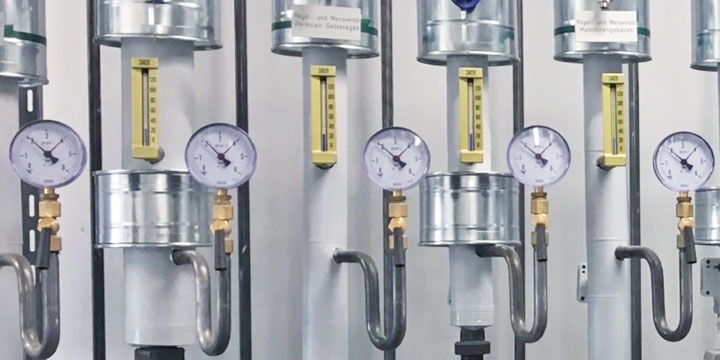
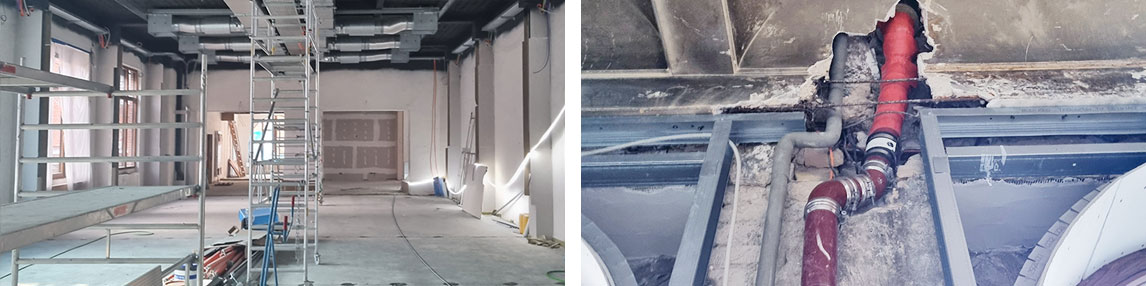
Building services engineering (BSE) planning services for the challenging task of designing the technical building services of the listed trade union house in Kiel and integrating it into the historic structure. The scope of services included the planning and coordination of HVAC, electrical engineering and building automation as well as the integration of modern technical systems while adhering to the requirements of historic preservation. Implementation within the existing structure demanded a high degree of precision and coordination to ensure both technical standards and architectural quality.
Emil von Behring Gymnasium, Großhansdorf
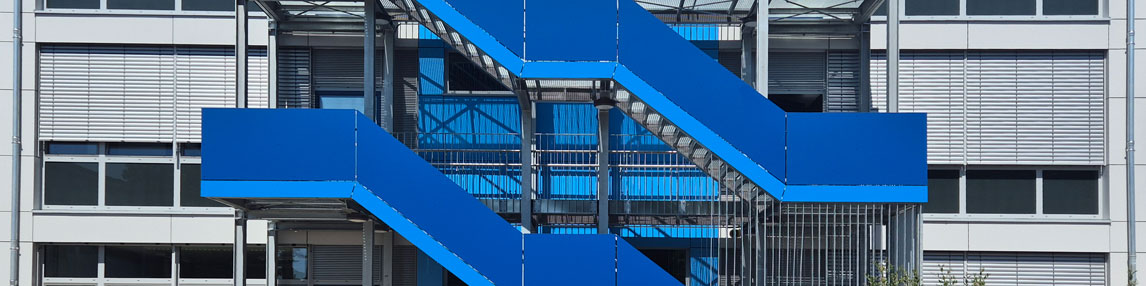
Tower 3 on the campus of Emil von Behring Gymnasium is undergoing comprehensive renovation. An external stairwell will provide a second escape route, while the facade, including windows, will be renewed and additionally insulated to significantly improve energy efficiency. Heating will continue to be provided by the existing combined heat and power (CHP) system in Tower 1. Heat distribution network will be adapted to the new room layouts, heating surfaces will be replaced and tubular radiators will be installed. Room temperatures in the classrooms are set at 20–21°C and in stairwells/corridors at 15°C. Ceiling penetrations, pipes and risers will be upgraded to meet fire safety standards and thermally insulated; exposed pipes will be secured with high-quality fixings.
The classrooms will be equipped with decentralized ventilation units with heat recovery, ensuring fresh air supply, room comfort and hygiene standards. Time-controlled systems guarantee demand-based ventilation before and after classes. A photovoltaic system with 48 modules (approx. 20 kWp) will be installed on the roof, supplemented by an inverter, energy storage system, energy meter and data logger. The generated electricity will be used entirely for the building's own needs. The system is integrated into the lightning protection system and equipped with a remote fire department switch.
The electrical supply for Tower 3 will be provided by a new sub-distribution board housed in an E30 fire-resistant enclosure. All circuits for ventilation, lighting, sunshades and window openings are connected and temporary power supply and installations during the construction phase are also included. LED lighting, safety lights and emergency exit lights comply with school building regulations and DIN VDE standards, supplemented by final circuits in E30 cables, to ensure compliance with the MLAR (Model Building Regulations for School Buildings).
The external lightning protection system will be extended and grounding systems will be installed for the steel structure of the stair tower. The smoke and heat exhaust ventilation system for window openings is centrally controlled and equipped with manual release buttons and automatic smoke detectors. These measures combine fire protection, energy efficiency, modern building technology and security in a well-thought-out overall concept and ensure a future-proof, safe school operation.
The classrooms will be equipped with decentralized ventilation units with heat recovery, ensuring fresh air supply, room comfort and hygiene standards. Time-controlled systems guarantee demand-based ventilation before and after classes. A photovoltaic system with 48 modules (approx. 20 kWp) will be installed on the roof, supplemented by an inverter, energy storage system, energy meter and data logger. The generated electricity will be used entirely for the building's own needs. The system is integrated into the lightning protection system and equipped with a remote fire department switch.
The electrical supply for Tower 3 will be provided by a new sub-distribution board housed in an E30 fire-resistant enclosure. All circuits for ventilation, lighting, sunshades and window openings are connected and temporary power supply and installations during the construction phase are also included. LED lighting, safety lights and emergency exit lights comply with school building regulations and DIN VDE standards, supplemented by final circuits in E30 cables, to ensure compliance with the MLAR (Model Building Regulations for School Buildings).
The external lightning protection system will be extended and grounding systems will be installed for the steel structure of the stair tower. The smoke and heat exhaust ventilation system for window openings is centrally controlled and equipped with manual release buttons and automatic smoke detectors. These measures combine fire protection, energy efficiency, modern building technology and security in a well-thought-out overall concept and ensure a future-proof, safe school operation.
New Daycare Center, Groß Sarau
In Groß Sarau, close to Lake Ratzeburg, a new single-story building for two daycare groups and two preschool groups was constructed on an open field area. The building combines modern group rooms with integrated teaching kitchens, an administration and staff area, a distribution kitchen and a spacious, media-equipped multipurpose room for diverse uses.
Heating is efficiently provided by a heat pump with underfloor heating, complemented by hygienic dishwashing facilities and child-friendly lighting. Safety measures such as fire and burglar alarm systems and emergency lighting have been consistently integrated.
The complex is rounded up by an office and staff area for the municipal maintenance department with a separate entrance, as well as a vehicle hall with a workshop area, which serves the municipality as a maintenance depot. The entire complex combines functionality, safety and contemporary architecture in a well-conceived design. Services groups 1, 2, 3, 4, 5, 7, and 8 of cost group 400, phases 1-8 according to the German Fee Structure for Architects and Engineers (HOAI), were planned and implemented.
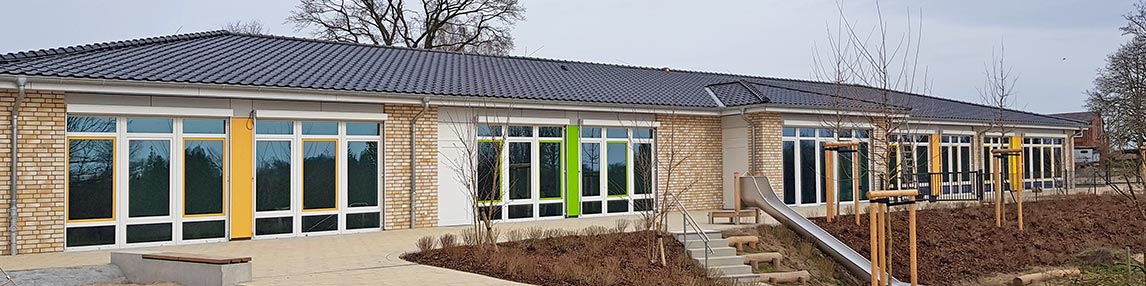
Heating is efficiently provided by a heat pump with underfloor heating, complemented by hygienic dishwashing facilities and child-friendly lighting. Safety measures such as fire and burglar alarm systems and emergency lighting have been consistently integrated.
The complex is rounded up by an office and staff area for the municipal maintenance department with a separate entrance, as well as a vehicle hall with a workshop area, which serves the municipality as a maintenance depot. The entire complex combines functionality, safety and contemporary architecture in a well-conceived design. Services groups 1, 2, 3, 4, 5, 7, and 8 of cost group 400, phases 1-8 according to the German Fee Structure for Architects and Engineers (HOAI), were planned and implemented.
New School Campus, Leipzig
Allover building services engineering (BSE) planning with high design standards for a multi-building school campus in Leipzig, commissioned by a nationally operating project developer. The focus is on an integrated, energy-efficient building concept built to demanding KfW standards, designed for complex school operations with classrooms, sports facilities and common areas.
The planning encompasses all building services groups (cost group 400) across all project phases and is carried out in close collaboration within an interdisciplinary, nationwide network of planning teams. Total investment amounted to approximately €35.000.000, of which €12.000.000 was for building services engineering.
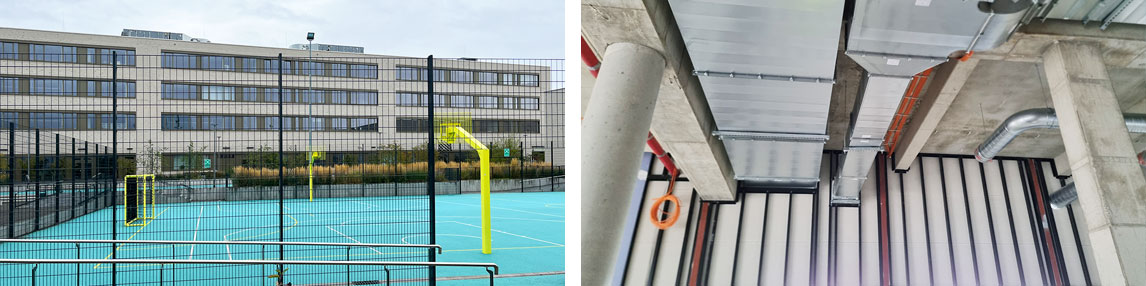
The planning encompasses all building services groups (cost group 400) across all project phases and is carried out in close collaboration within an interdisciplinary, nationwide network of planning teams. Total investment amounted to approximately €35.000.000, of which €12.000.000 was for building services engineering.
New construction and expansion of the Fire Service Technical Center, Ostholstein District, Lensahn
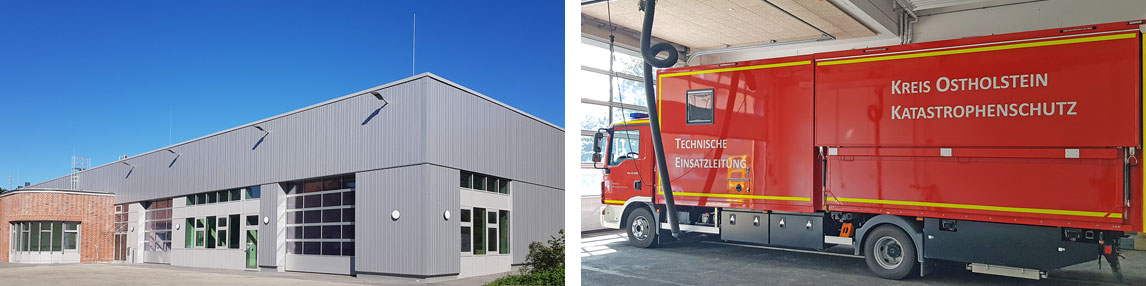
Comprehensive building services engineering (TGA) planning with high design standards for the expansion of the central fire service technical center within Ostholstein district. The focus is on precisely coordinated, robust systems for demanding operational use – from energy-efficient heat pump technology and ventilation with heat recovery to integrated photovoltaics and sophisticated drainage solutions. This includes the planning of technical installations in the outdoor area and entire drainage planning, complemented by modern electrical and communication technology as well as barrier-free access.